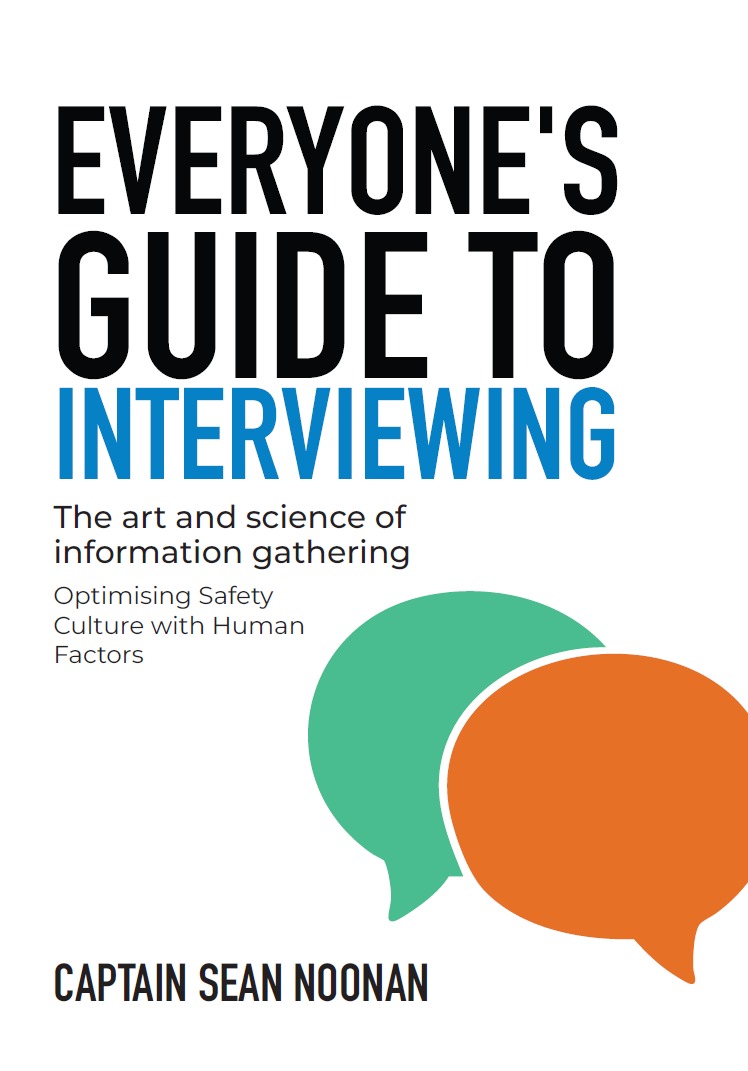
Everyone's Guide to Interviewing
Master the art and science of information gathering for maritime safety investigations and human factors assessment. This comprehensive guide provides practical frameworks for conducting effective interviews that uncover root causes and drive safety improvements.
Evidence-informed interviewing techniques • Safety culture assessment • Human factors investigation • Optimizing information gathering for incident analysis
Perfect for: Marine investigators, safety officers, DPAs, superintendents, and anyone responsible for understanding the human element in maritime incidents.
Purchase on Amazon →TMSA Element 14 Resources
Comprehensive guidance aligned with Tanker Management and Self Assessment Element 14 requirements for maritime human factors training
TMSA Element 14 Overview
Understanding the requirements and expectations for human factors training in tanker operations. How HF-Sea Sense courses support compliance and excellence.
View Training Programme →Implementation Guide
Step-by-step guidance for implementing human factors training programmes that demonstrate commitment to TMSA Element 14 principles.
Request Consultation →Assessment Tools
Evidence-informed frameworks for evaluating human factors capability and measuring the effectiveness of your training programmes.
Learn More →Best Practices
Industry-leading approaches to maritime human factors training, drawing on current research and lessons learned from successful implementations.
Our Approach →Industry Standards & Frameworks
Key maritime safety standards and frameworks that inform our evidence-informed approach
OCIMF TMSA (Tanker Management and Self Assessment)
The Oil Companies International Marine Forum's comprehensive framework for tanker safety management. Our training directly supports Element 14 (Human Factors) requirements, demonstrating commitment to human-centric safety culture development.
Visit OCIMF Website →ISM Code (International Safety Management)
International Maritime Organisation's framework for safe ship operation and pollution prevention. Human factors training is essential for effective ISM implementation and continuous improvement of safety management systems.
Visit IMO Website →EMSA Maritime Safety Guidelines
European Maritime Safety Agency's comprehensive analysis of maritime casualties and incidents, confirming that 80% involve human element factors. This evidence base informs our training content and priorities.
Visit EMSA Website →STCW Convention
Standards of Training, Certification and Watchkeeping for Seafarers. Our human factors training complements mandatory STCW requirements with evidence-informed behavioural leadership development.
Learn More →MLC 2006 (Maritime Labour Convention)
International Labour Organisation's comprehensive rights and protections for seafarers worldwide. Understanding human factors is essential for creating working environments that support both safety and welfare.
Visit ILO Website →Additional Resources
Supporting materials for maritime safety professionals
Reading List
Curated collection of essential texts on maritime human factors, safety culture, and behavioural leadership for continuous professional development.
Request Full List →Case Studies
Real-world examples of how human factors training has optimised safety culture and reduced incidents in maritime organisations.
View Case Studies →White Papers
In-depth analysis of current topics in maritime human factors, safety culture development, and evidence-informed training approaches.
Access White Papers →Useful Links
Connections to maritime safety organisations, research institutions, and regulatory bodies advancing human factors understanding.
View Links →Industry Updates
Latest developments in maritime human factors research, regulatory changes, and emerging best practices in safety culture development.
Get Updates →Partner Resources
Access to Resilient Leaders Elements™ methodology, behavioural assessment frameworks, and leadership development materials.
Learn About Resilient Leadership →Need Specific Resources or Guidance?
We're here to support your maritime human factors journey. Contact us to discuss your specific needs, request customised materials, or explore how our training can support your organisation.
Get in Touch